Cat Enrichment: The Difference Between Entertaining and Enriching Your Cat
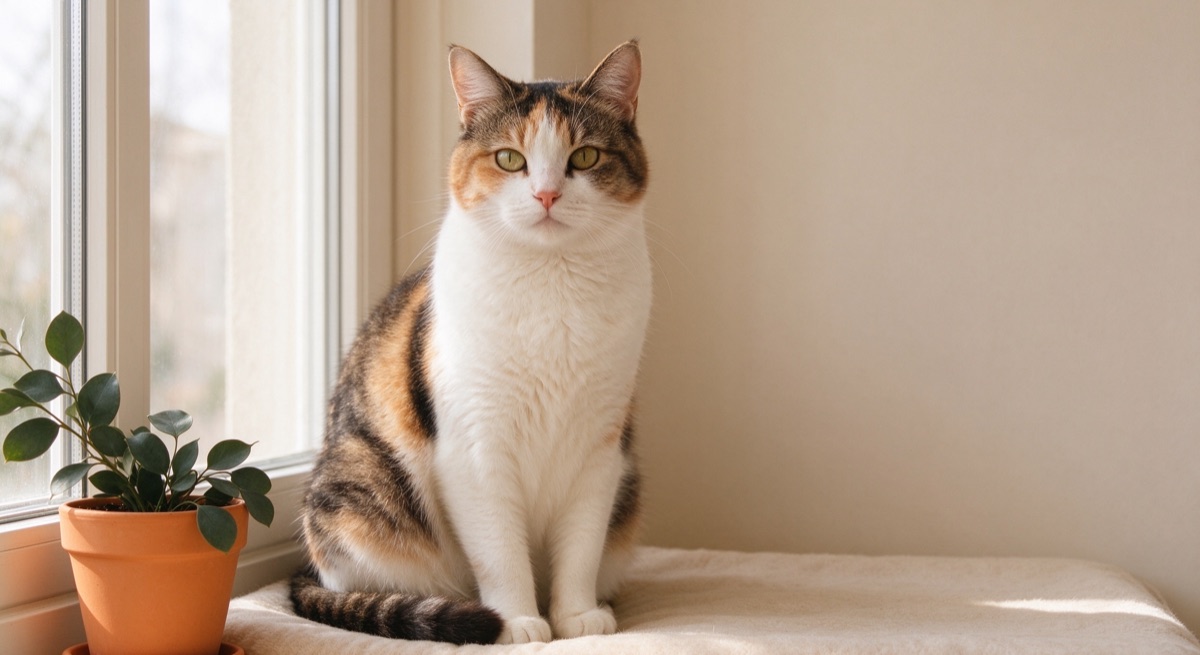
A cat left with a full bowl and a quiet room isn't necessarily content — it's just unoccupied. Enrichment isn't entertainment. Entertainment passes the time; enrichment satisfies an instinct.
The instinct behind it
A house cat is still a small predator. The drives that kept its ancestors alive — stalking, pouncing, climbing, hiding, scent-marking — don't switch off indoors. When they have nowhere to go, they come out sideways: the 3 a.m. sprint, over-grooming, or a cat that sleeps all day not out of peace but out of nothing to do.
What actually works
- Vertical space. Cats feel safest with height. One good cat tree near a window beats five toys scattered on the floor.
- A hiding place that is actually hidden. A covered perch, or a cardboard box turned on its side, gives a nervous cat somewhere to retreat without feeling cornered.
- Hunting games, not waving toys. Move a wand toy like prey — slow, then still, then a quick dart — and let the cat catch it. The catch is the reward.
- Food as a puzzle. A slow feeder, or scattering a little dry food, turns a two-minute meal into a short hunt.
- Change, gently. Rotate toys, move the perch, introduce a new texture. Novelty is enrichment, but it should arrive slowly enough not to feel like disruption.
The quiet test
A well-enriched cat isn't necessarily the busiest one. It's the one that chooses when to engage and when to rest — that naps deeply, plays in short bursts, and seeks you out on its own terms. If the only sign of life is at 3 a.m., that isn't energy. That's a backlog.
The bottom line
Buy fewer toys and more variety of experience. A cat with height, a hiding place, a daily hunt, and a little novelty isn't a cat that needs more stuff. It's a cat with a life.
General guidance, not veterinary or behavior advice.
← All guides