How to Choose a Dog Crate Your Dog Will Actually Like
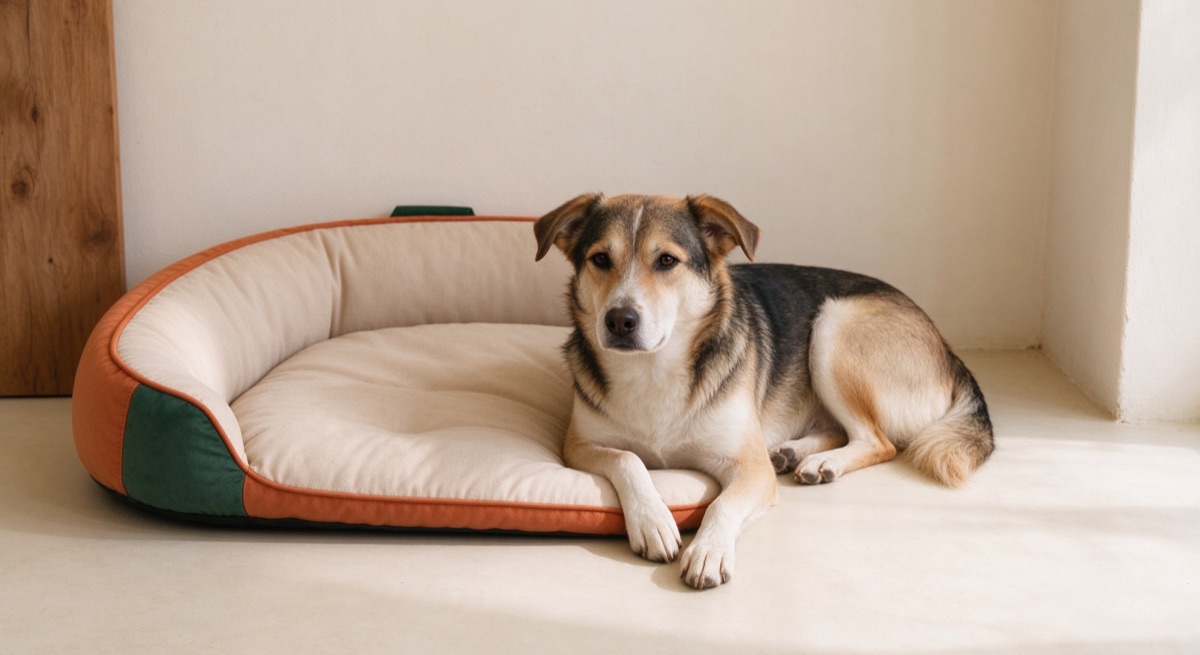
A dog crate gets a bad reputation because we use the wrong word. "Cage" implies confinement; "den" implies safety. The difference isn't semantic. A well-chosen crate gives a dog a place that is quietly theirs — a corner of the house where nobody reaches in, nobody crowds, and the rules are simple.
This guide is about choosing the right one, and only then introducing it kindly.
Start with size, not brand
Most crate mistakes happen before you buy. Too small, and it's cramped. Too large, and it stops feeling like a den.
Measure your dog standing: from nose to the base of the tail, and from the floor to the top of the head (or the tips of the ears, if they stand). Then add a few inches — not a foot. A dog should be able to stand, turn around, and lie down stretched out, but the crate should not double as an apartment.
If you're buying for a puppy, buy for the adult size and use a divider until they grow into it. It's the single change that saves most people a second purchase.
Three honest options
- Wire crates breathe, clean easily, and adapt well. But they look like what they are, and some dogs find the openness unsettling.
- Plastic travel crates are more den-like and often preferred by dogs who like darkness and quiet — at the cost of airflow and easy cleaning.
- Furniture crates disappear into a room and look like real furniture. You pay partly for the walnut finish, not the dog.
There is no single best answer, only the one that matches your dog and your home. The useful question is not "which is best" but "what does this dog need in order to settle?"
What actually matters
- A door that latches firmly and cannot be knocked open from the inside.
- No sharp edges or pinch points on hinges and seams.
- Ventilation on more than one side.
- A floor tray that slides out for cleaning.
- Crash-safety ratings if the crate will ride in the car.
Everything else — the matching pad, the name plate, the color — is for you, not the dog.
A crate is only as good as its introduction
This part matters more than the purchase. A crate should never be introduced as punishment. Leave the door open, put something good inside, and let the dog choose to enter. Build duration slowly, and never force a closed door on a panicking dog.
A dog that panics at a closed door is not being stubborn. It is telling you to slow down.
If distress persists, that is the moment to consult a qualified trainer or behavior professional, not to buy a sturdier latch.
The bottom line
Buy for the adult size. Prioritize safety and airflow over looks. And spend your patience on the introduction rather than on the accessories. A good crate disappears into the routine; a great one becomes a place your dog seeks out.
This is general guidance, not veterinary or training advice. If your dog shows distress, work with a qualified professional.
← All guides